
What is Day Training?
If you’ve ever wished your dog could get high‑quality, professional training without sending them away for weeks, day training might be exactly what you’re looking for. It’s one of the most effective, dog‑friendly ways to build real-life skills and prevent problem behaviors from developing.
Day training is a program where a professional trainer works with your dog for you—but instead of your dog living at a facility, they stay home with you. The trainer comes to your home (or meets your dog in a familiar environment), trains them directly, and then hands the leash back to you with clear guidance on how to maintain the new skills. Think of it as having a personal trainer for your dog, but without the stress or disruption of being separated from their family.
A typical day training program includes:
Multiple weekly sessions where the trainer works one‑on‑one with your dog
Regular transfer sessions to teach you how to use the new skills and maintain them between trainer sessions
Customized training plans tailored to your dog’s needs
Real‑world practice in the environments your dog actually lives
Day training is an excellent option for new puppies who need a solid foundation, newly adopted dogs who need some help developing good manners, and for busy families or professionals who cannot dedicate hours a day to training.
Why Day Training Works So Well
Dogs learn best with consistency, clarity, and low-stress learning environments. Day training checks all those boxes.
1. Your dog learns at home, where behavior actually happens

Dogs don’t generalize well. A “sit” learned in a kennel doesn’t automatically translate to your living room or the neighborhood park. Dogs are contextual learners, which means they associate behavior with specific places and people. Behaviors learned at a training facility might regress when your dog comes home, simply because the environment and people have changed. Day training takes place in your dog’s real world, which means faster learning, better reliability, and fewer setbacks.
2. No stressful separation
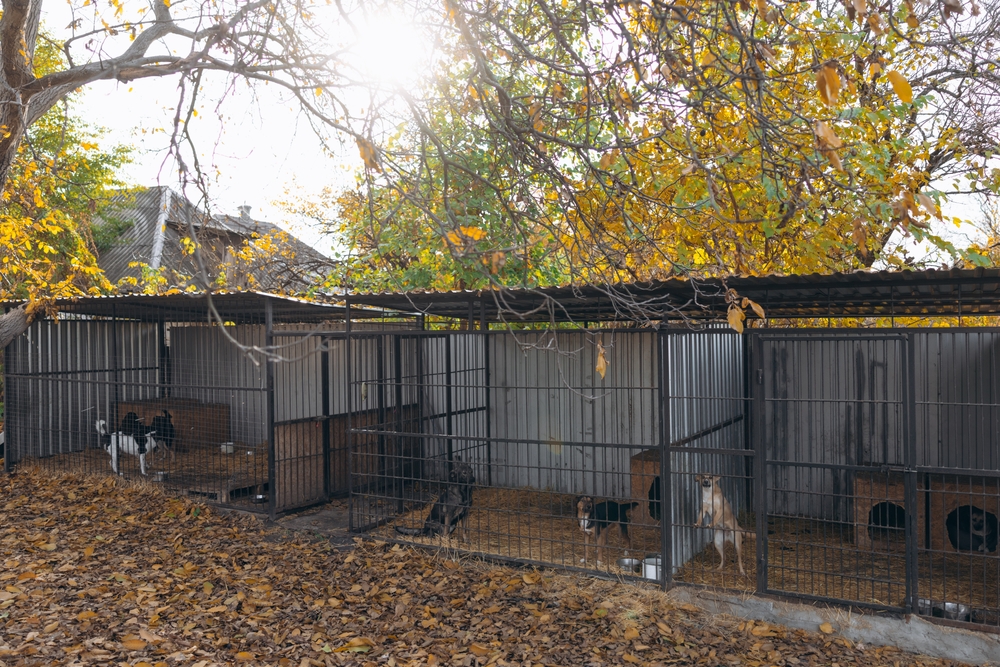
Sending a dog to a board-and-train facility can have some pretty intense emotional fallout for your dog, especially if she already has anxiety, fear, or separation issues. But even dogs without anxiety issues often experience significant stress in a board-and-train environment. Dogs, like people, do not learn best when they are stressed out or afraid. Being in a state of fear inhibits higher cognitive processing in favor of basic survival. A dog’s ability to retain and process new information is severely impaired if she is under stress.
Day training keeps your dog in their comfort zone, which supports better learning and emotional well‑being.
3. You and your family get coached along the way

One of the biggest gaps in board‑and‑train programs is the transfer of skills to you, the guardian. Your dog might learn those new skills while away, but without consistency on your part, those skills might not last as long as you’d hope. Board-and-train programs can often skip out on providing guardians with the information and skills needed to help their dog thrive long-term.
Day training, on the other hand, builds you into the process from the start. You become part of the training team, not an afterthought. You accompany your dog on her training journey and can watch her progress in real time. You can ask questions as they arise, involve other family members in your dog’s training, and fully participate in practicing your dog’s new skills.
4. It’s fully customizable

Whether your dog needs help with leash walking, manners, or puppy foundations, day training adapts to your goals. You’re not locked into a one‑size‑fits‑all program. Because day training programs take place in your dog’s environment, trainers can adapt their goals and methods to your specific dog in your specific environment. And, should new issues arise over the course of the program, training sessions can pivot to meet those rising needs.
5. It sets realistic goals

Board-and-train programs often promise the world. They can “fix” your dog’s reactivity in two weeks. Give you a perfect puppy in three weeks. But the reality is that real behavior change takes time, patience, and compassion to achieve. Board-and-train programs often rely on suppressing behavior with harsh punishments in order to achieve these rapid results. But the reality of dog –and human!--behavior change is that real, lasting, meaningful change takes time. Harsh, suppressive methods may work in the short-term, but they do not address your dog’s underlying emotional responses and can, in fact, make behavior problems worse over time.
Day training programs run by responsible, qualified positive trainers set realistic goals for your dog. These goals are based on the most up-to-date science on how dogs learn and develop. Day training programs often have smaller, more realistic goals that you and your dog can achieve together.
How Day Training Differs From Board-and-Train Programs
Board‑and‑train has been around for decades, but that doesn’t mean it’s the gold standard. In fact, many modern trainers are moving away from it. Here’s how the two approaches compare:
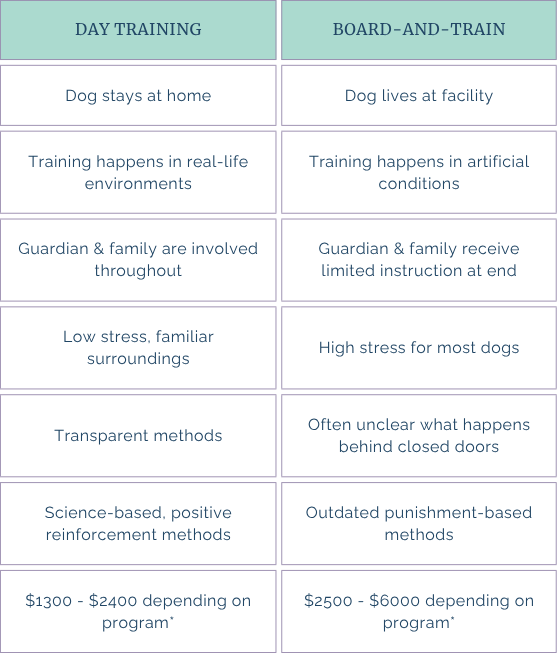
*based on publicly available 2026 Seattle-area pricing
Why Day Training Is Often the Better Choice
Day training is often better for most dogs and most families. Your dog learns faster in a relaxed, familiar environment and with humane methods centered on your dog's well-being. Those behaviors stick because they're practiced where they matter, You and your family are able to participate in your dog's training journey, increasing the likelihood for long-term success.
Board‑and‑train may promise quick results, but those results often fall apart once the dog returns home. By providing you and your dog both with the tools needed to succeed, day training better provide real, lasting results.
